
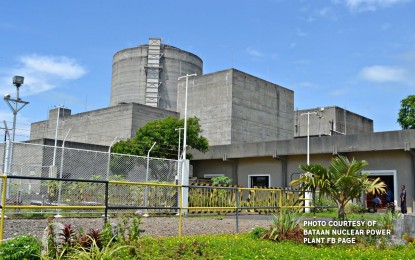
SUBIC BAY FREEPORT — The municipality of Morong, Bataan has declared the location of the Bataan Nuclear Power Plant (BNPP) as a nuclear-free zone, a move seen to thwart the planned revival of the facility that has been mothballed since its completion in 1984.
According to the Nuclear-Free Bataan Movement (NFBM), a province wide network espousing community rights against the perils of nuclear energy, the Sangguniang Bayan of Morong has passed a “Non-Nuclear Zone” ordinance covering the town of Morong on its third and final reading on Monday, June 22.
The ordinance disallowed the construction, operation, and storage of nuclear power facilities and radioactive materials within the municipality.
“The approval of this ordinance marks Morong’s commitment to a future anchored in community safety, environmental protection, and meaningful people’s participation,” the NFBM said.
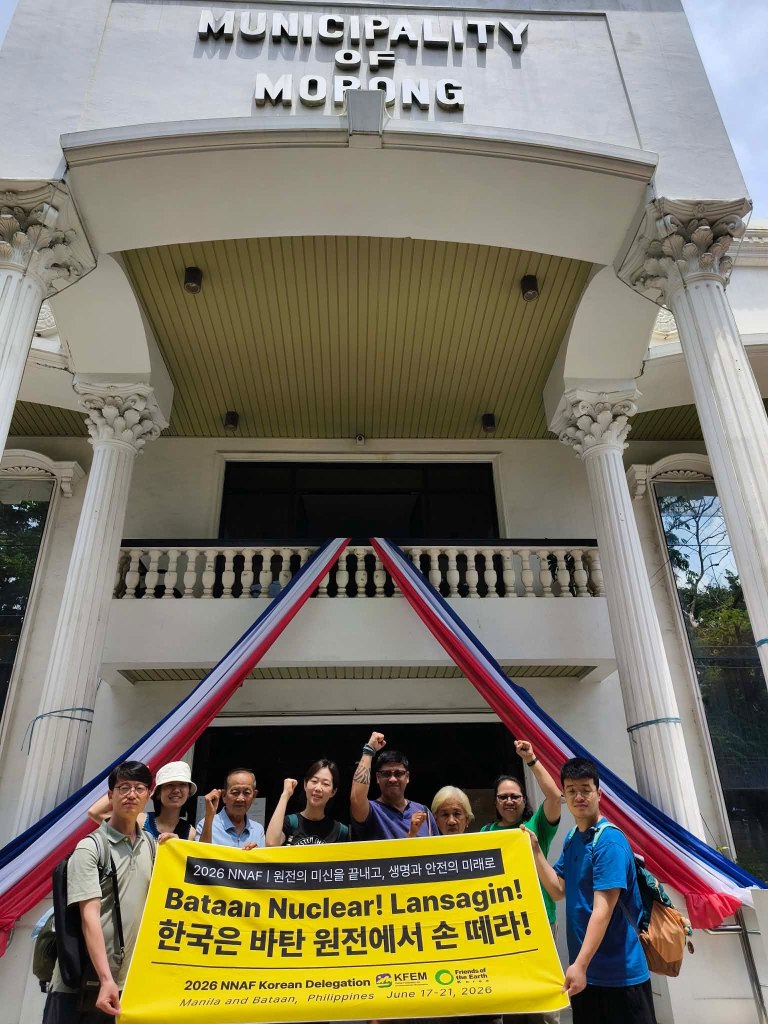
“This victory does not mark the end of the struggle—but it is an important step forward in advancing a nuclear-free future,” it added.
Morong passed the landmark non-nuclear zone ordinance after environmental advocates, youth and community groups from the Philippines, South Korea, Taiwan, Japan, India, and Australia commemorated the June 1985 Welga ng Bayan Laban sa Plantang Nukleyar during the 33rd No Nukes Asia Forum (NNAF) held in Quezon City and Bataan.
The Welga ng Bayan, which drew over 33,000 participants, was marked by a protest march from Dinalupihan town to Balanga City and culminated in protest caravan to Morong on June 18 to 20, 1985.
The three-day protest paralyzed Bataan and highlighted public outcry over safety concerns, massive foreign debt, as well as alleged corruption issues that hounded the 621-megawatt power project built by Westinghouse during the Marcos dictatorship.
Following the Chernobyl nuclear plant disaster and the ouster of Marcos Sr. in 1986, then President Corazon Aquino officially shut down the controversial project.

Members of the Sangguniang Bayan of Morong, Bataan after passing “Non-Nuclear Zone” ordinance on June 22 (NFBM)
However, the Philippine government lately said it is now exploring options to use nuclear energy to address growing power demands, including bringing the BNPP back online.
In 2024, the Department of Energy unveiled plans for a nuclear energy program, setting a goal of 2,400-megawatt nuclear power capability by 2032.
Pangasinan 2nd District Representative Mark Cojaungco has also pushed a shift to nuclear power, and has pushed for the revival of the mothballed Bataan plant and the construction of a 1,000-megawatt nuclear power plant in Labrador, Pangasinan.
Still, the NFBM vowed to out up “intense resistance” to plans for BNPP revival, as well as the establishment of a nuclear program through the Republic Act 12305, or the Philippine National Nuclear Energy Safety Act.
The NFDM pointed out that the reviving the BNPP would cost taxpayers up to P180 billion, despite structural vulnerabilities and geographical risks associated with the plant’s location.
“The Philippines is not suited to host a nuclear plant, as we have frequent earthquakes and typhoons,” said CFBM national coordinator DJ Janier during the No Nukes Asia Forum.
“This is not an ideal condition. There is not a good condition to have a nuclear power plant here at any time,” Janier added. (Taktikom News and Features)






Leave a comment