
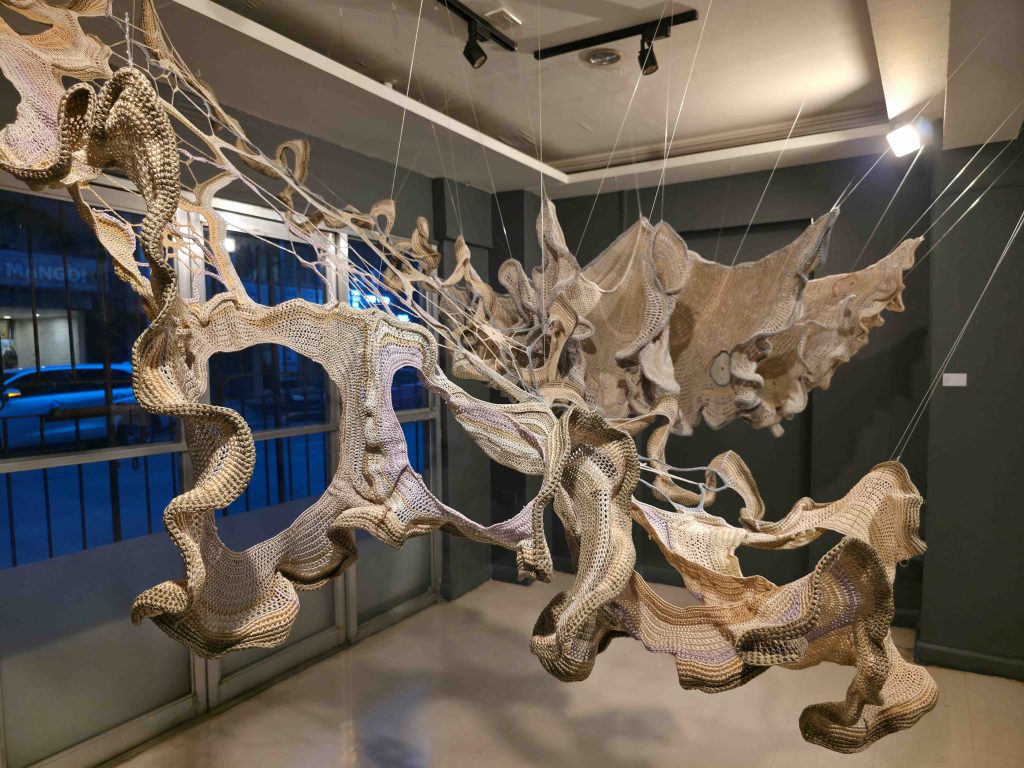
MANILA — An exhibition examining the histories of colonialism, territorial disputes and the lived realities of communities affected by contested waters will be on view at the JCB Gallery of Philippine Women’s University (PWU) in Malate, Manila, from Sept. 25 to Dec. 12, 2026.
Titled “Dashed Pearl: Drawing Lines in Water,” the exhibition is curated by Portia Placino and features works by National Artist for Visual Arts Imelda Cajipe Endaya, Aze Ong, Ezra Acayan, Joanna Rose Aglibot and William Matawaran, Josephine Turalba, and Manny Montelibano.
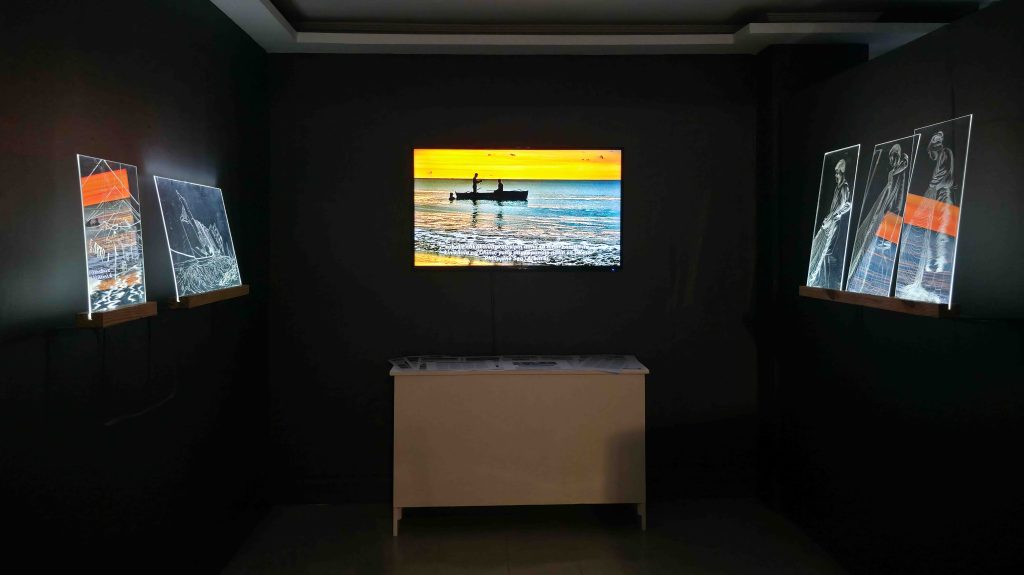
The exhibition focuses on the Philippines’ relationship with contested waters, particularly the West Philippine Sea, and examines how territorial disputes affect communities whose livelihoods depend on the sea.
Placino said the exhibition considers the continuing effects of colonialism and the unequal distribution of power and resources in relation to the country’s land, waters and natural resources.
The exhibition also looks at the implications of the 2016 arbitral ruling in the Philippines’ case against China. The ruling established the Philippines’ legal positions on maritime entitlements under the United Nations Convention on the Law of the Sea (UNCLOS), but questions involving access, security, resources and the protection of communities in contested waters have continued.
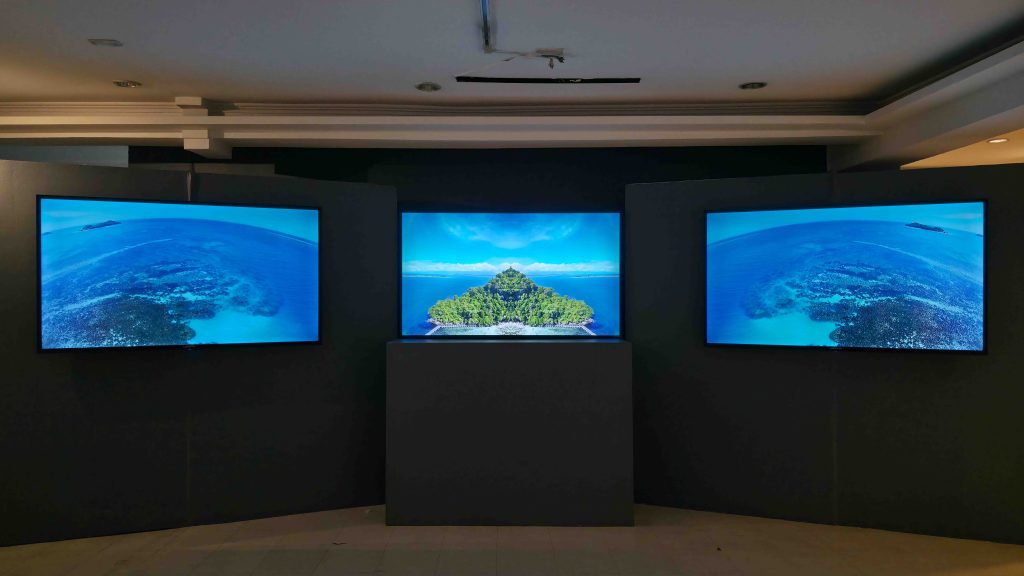
At the center of the exhibition is Manny Montelibano’s “A Dashed State” (2015), a video work first presented at the Philippine Pavilion at the 56th Venice Biennale in an exhibition curated by Patrick D. Flores. Its reinstallation a decade later connects the current exhibition to the Philippines’ return to the Venice Biennale and to broader questions of territory, representation and power.
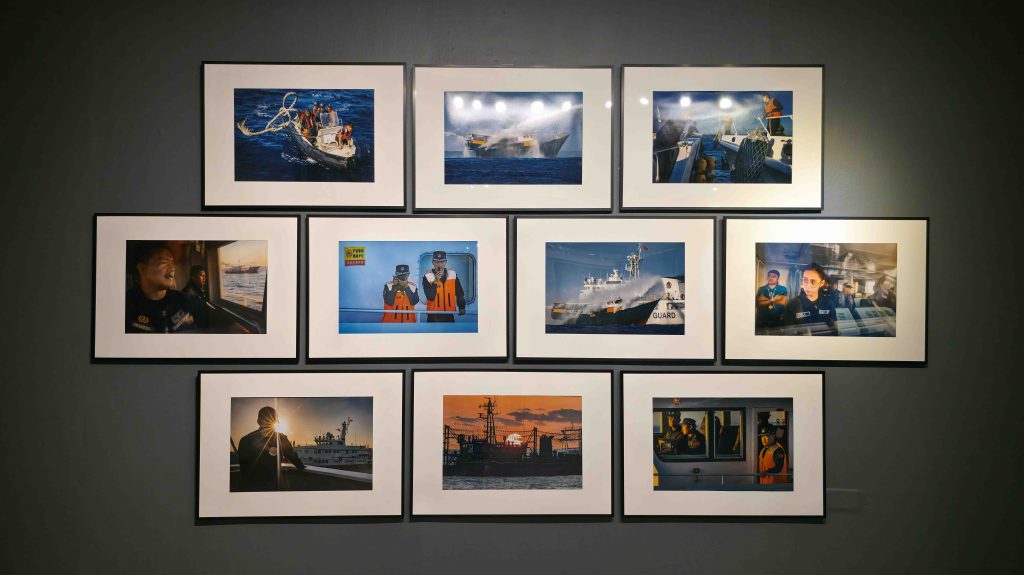
Photographer and photojournalist Ezra Acayan contributes images documenting conditions in contested waters, including encounters at sea, confrontations, restricted access and the risks faced by people operating in the area.
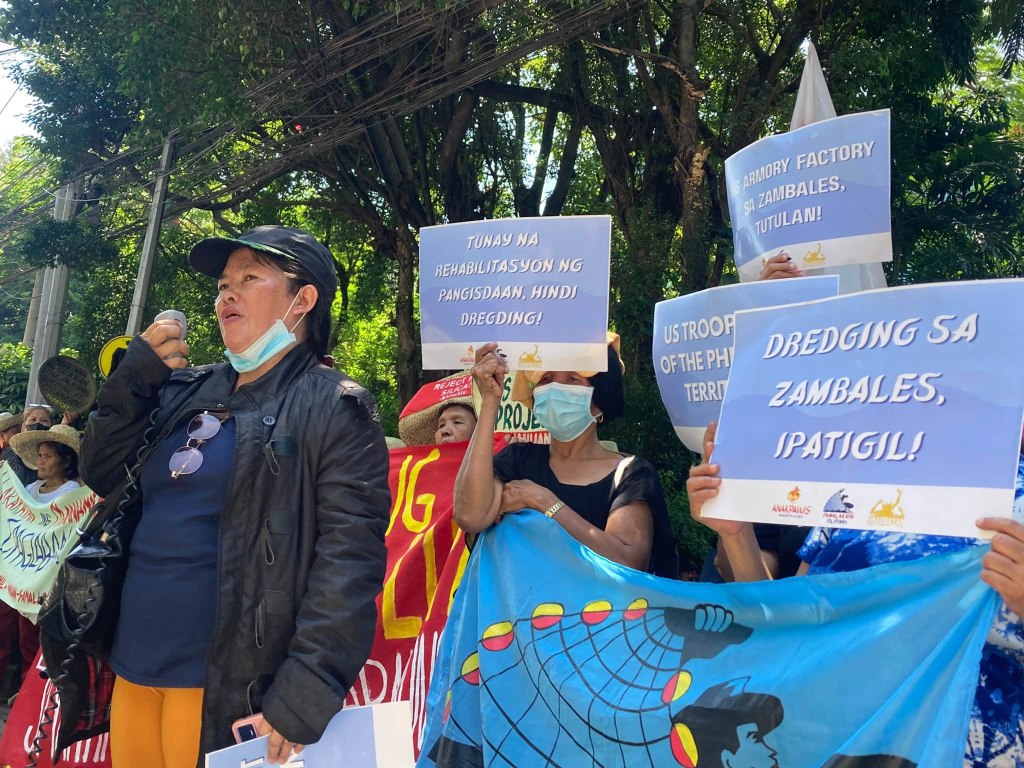
The exhibition also features the collaborative work of artist William Matawaran and journalist Joanna Rose Aglibot, based on fieldwork and continuing engagement with fisherfolk in Zambales. Their work documents the risks faced by fishing communities, including uncertain access to fishing grounds, economic instability and the dangers associated with working in contested waters.
Josephine Turalba’s works examine the relationship between legal recognition of maritime rights and the ability to exercise and protect those rights. Her work “Do Not Call It Disputed” draws from the Carta Hydrographica y Chorographica de las Yslas Filipinas, commonly known as the Murillo Velarde map, which was first published in Manila in 1734 and was later cited as evidence in the Philippines-China arbitration case.
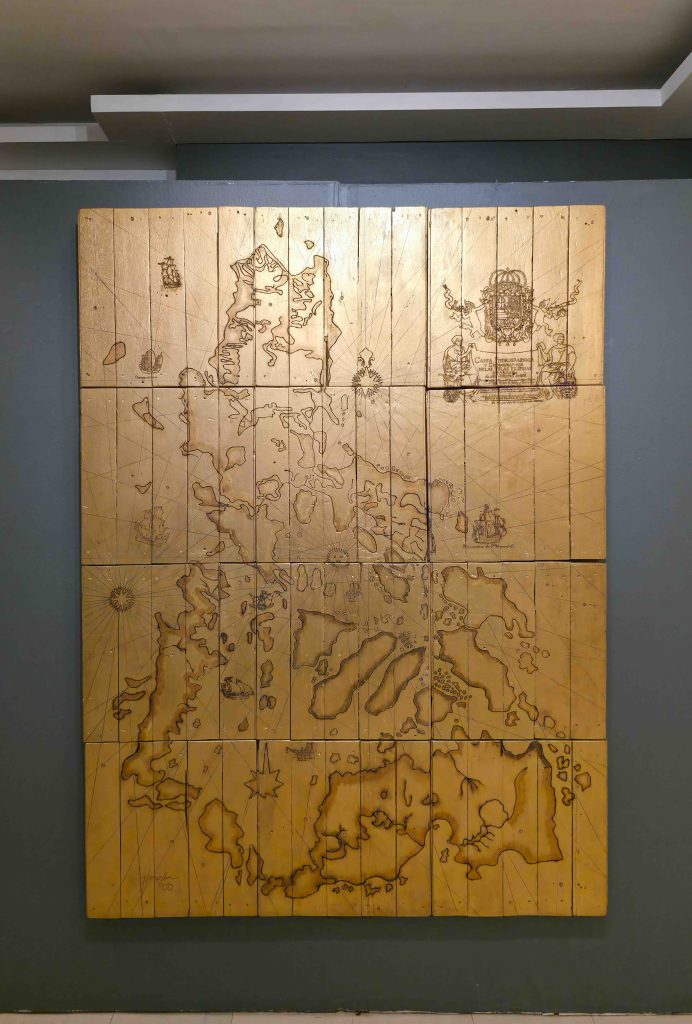
Turalba reinterpreted the map using scrap wood from PWU classrooms. Her later experimental works shift the perspective toward marine life, considering contested waters from the viewpoint of sea creatures.
Aze Ong’s work similarly turns to marine life, using coral-like textile forms to reflect on reefs, resilience and the relationship between the sea and coastal communities.
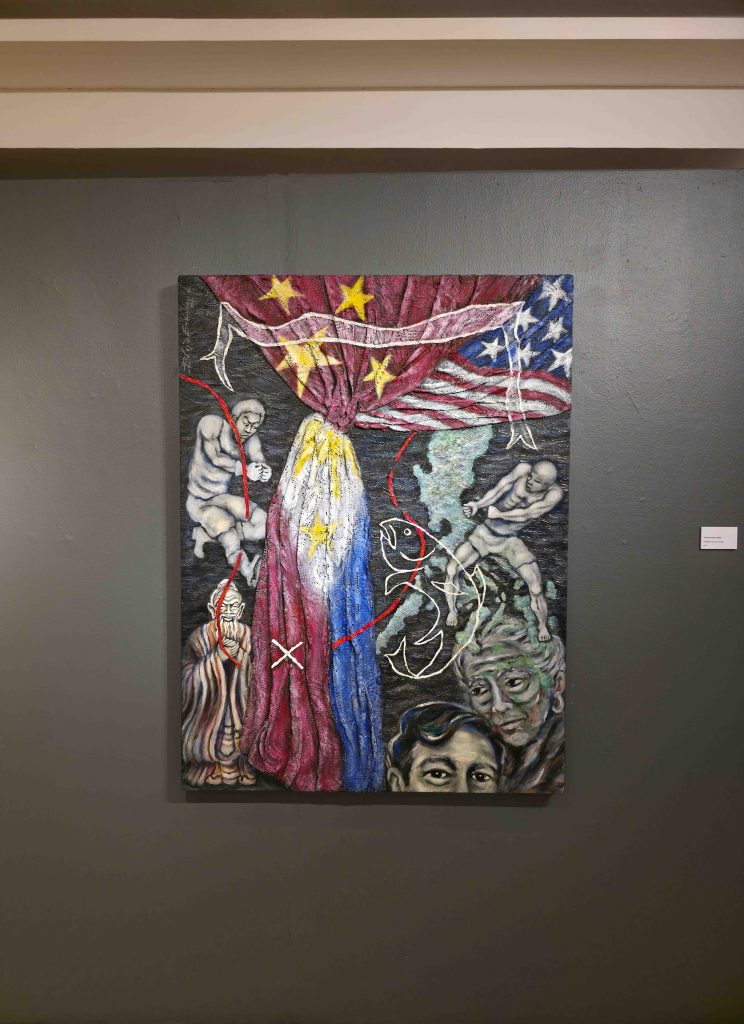
Cajipe Endaya’s work addresses broader issues of inequality, political power and vulnerability, connecting the territorial dispute to what Placino describes as the continuing precarity experienced by Filipinos affected by forces beyond their control.
Aglibot also returns to the experiences of fisherfolk she has worked with, focusing on the effects of prolonged uncertainty on people who continue to live and work near contested waters.
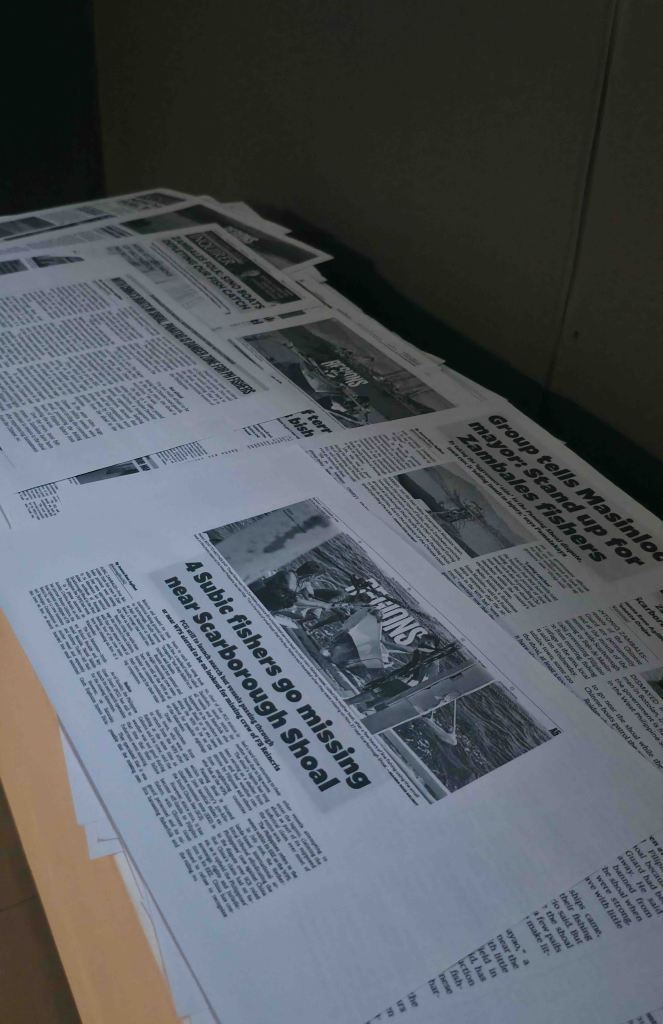
According to Placino, the exhibition considers the West Philippine Sea not only as a geopolitical issue but also as a space connected to livelihoods, security and everyday life.
The title “Dashed Pearl” refers to the Philippines’ longstanding image as the “Pearl of the Orient” and places that image against the country’s history of colonial extraction and continuing disputes over territory and resources.
“Dashed Pearl: Drawing Lines in Water” will be open Monday to Friday from 9 a.m. to 4 p.m. The gallery is also open on Saturdays by appointment.
For inquiries, contact the JCB Gallery at jcbgallery@pwu.edu.ph.


Leave a Reply