
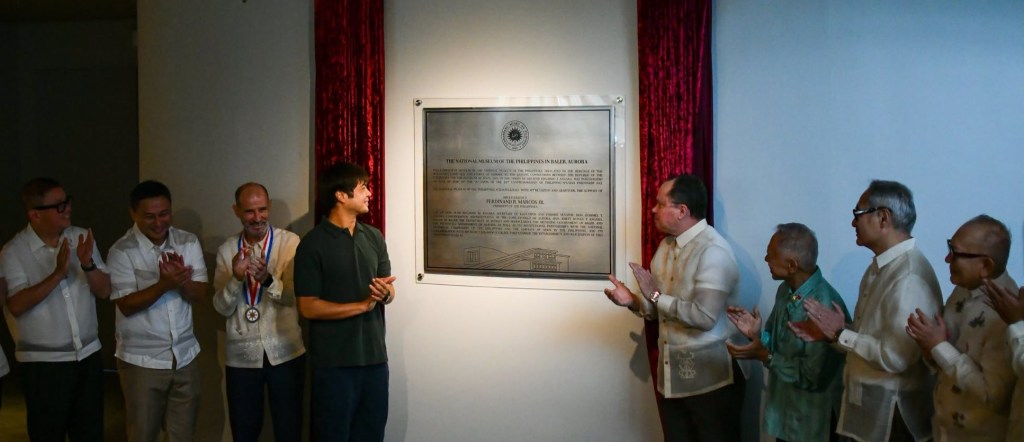
BALER, Aurora — The National Museum of the Philippines (NMP) officially inaugurated the National Museum of the Philippines–Baler on Tuesday, June 30, 2026, marking a significant milestone in the preservation, promotion, and accessibility of Aurora’s rich cultural, historical, artistic, and natural heritage.
The inauguration coincided with the celebration of the 24th Philippine-Spanish Friendship Day, highlighting the enduring historical and cultural ties between the Philippines and Spain while reinforcing Aurora’s growing role as a center for cultural tourism and heritage conservation.
The unveiling of the museum marker was attended by Vincent William Araneta Marcos, son of President Ferdinand R. Marcos Jr.; His Excellency Miguel Utray Delgado, Ambassador of Spain to the Philippines; Education Secretary Juan Edgardo “Sonny” Angara; Agriculture Secretary Francisco P. Tiu-Laurel Jr.; Tourism Secretary Maria Bernardita Angara-Mathay; National Museum Chairperson Andoni M. Aboitiz; National Historical Commission of the Philippines Chairperson Regalado Trota Jose Jr.; National Museum Director-General Jeremy R. Barns; National Museum Trustees Philip Rodriguez, Carlo Ebeo, and Jose Carlos Campos; Aurora Governor Isidro P. Galban; Aurora Representative Rommel Rico T. Angara; Baler Mayor Rhett Ronan T. Angara; together with national and local government officials, cultural leaders, and members of the diplomatic community.
In a message delivered by Vincent William Araneta Marcos on behalf of President Ferdinand R. Marcos Jr., the President underscored the importance of preserving the nation’s cultural heritage and expanding access to educational and cultural resources. He said the opening of NMP-Baler forms part of the administration’s broader commitment to safeguarding the country’s heritage while making culture, history, and learning more accessible to present and future generations.
Designed by renowned Filipino architect Ed Calma, the museum draws inspiration from Aurora’s breathtaking landscapes and the Sierra Madre Mountain Range. Its contemporary architecture reflects the province’s cultural identity while serving as a venue for education, heritage preservation, cultural appreciation, and community engagement.
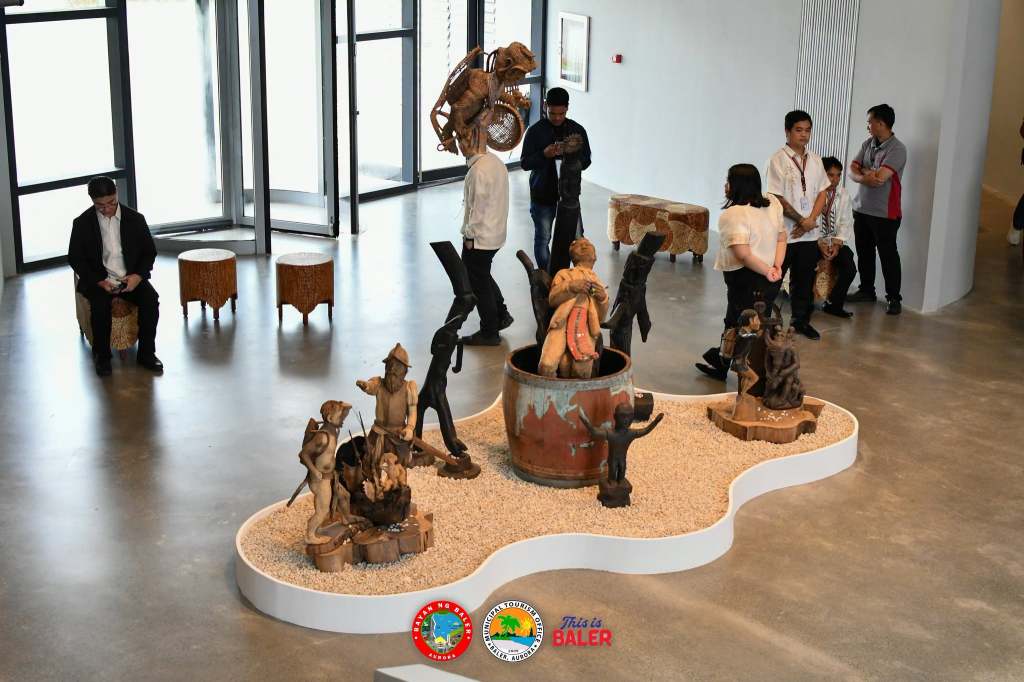
The museum features three permanent galleries that showcase Aurora’s unique history, biodiversity, culture, and artistic heritage.
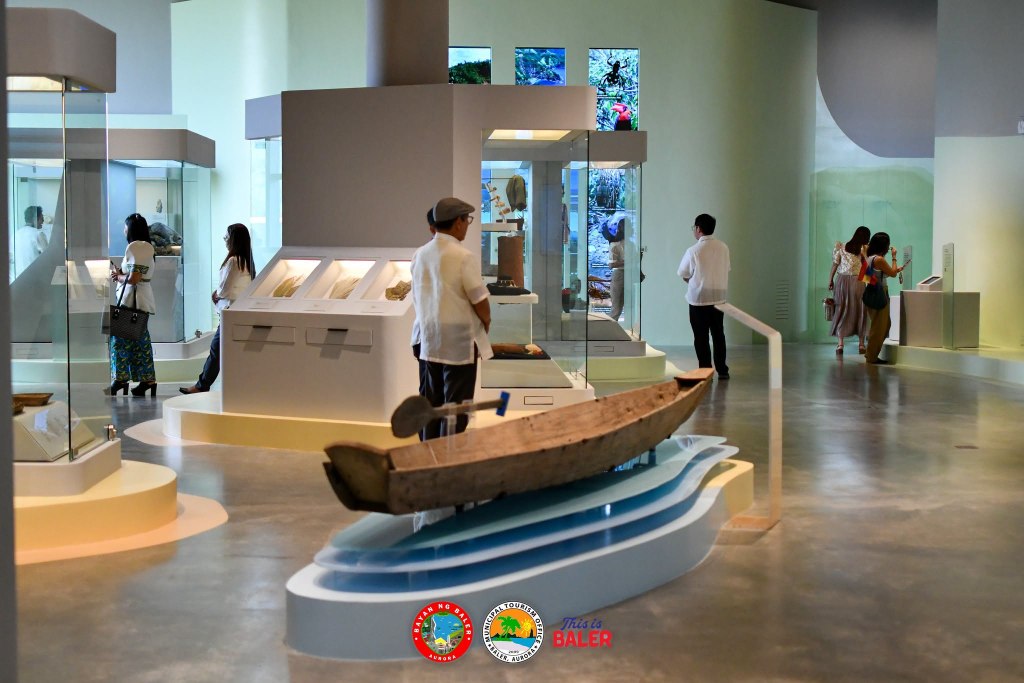
The Cruce de Caminos Gallery traces centuries of Filipino-Spanish relations through important historical artifacts, including the rare Mariner’s Astrolabe, one of only two recovered in the Philippines and declared a National Cultural Treasure; the historic Komedya de Baler; Capiz window panels; the revered Image of the Santo Niño; a reconstruction of old Baler; and archaeological discoveries from the Julio Site that reveal indigenous burial traditions before and during the Spanish colonial period.
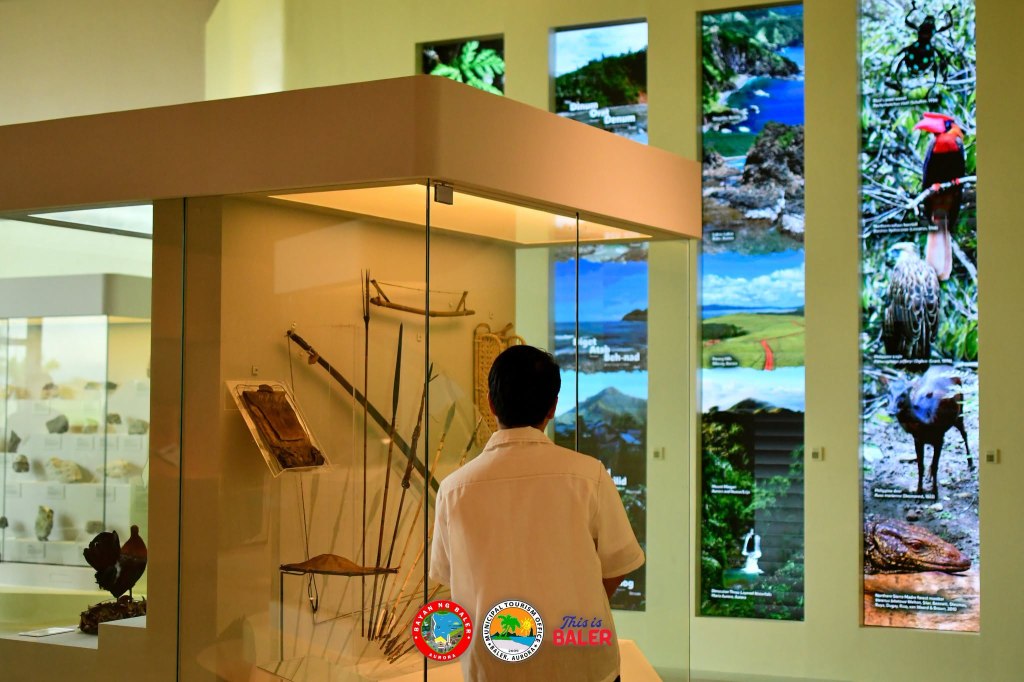
The Sierra, Tierra, Costa Gallery highlights Aurora’s mountains, forests, rivers, and coastlines through exhibits featuring endemic wildlife, geological formations, Indigenous knowledge systems, biodiversity, local traditions, and the province’s world-renowned surfing culture. The gallery also honors the resilience of Aurora’s communities following the devastating Tromba Marina.
Meanwhile, the Tagpuan/Encuentro Gallery showcases contemporary Philippine art through works by leading Filipino artists, including Fountain 010 by Rodel Tapaya Eustaquio, Ang mga Manananggal sa Laot by Archie Oclos, Ang INDIO-GENIUS Lakas ni Rizal – Pamana ng Kapwa Katutubo by National Artist Kidlat Tahimik, and Wood Things by installation artist JUNYEE. The collection invites visitors to reflect on identity, migration, history, Indigenous heritage, and cultural exchange.
In an interview, National Museum Deputy Director-General for Museums Arvin Manuel Villalon said the Baler museum was established to become a learning space where residents and visitors can better understand and appreciate Aurora’s heritage.
“Through selected objects, natural history specimens, artifacts, and works of fine art, we are able to showcase the richness of being Filipino and the richness of Aurora,” Villalon said.
He added that the exhibitions were designed to be more inclusive by presenting information in three languages, including a localized Filipino version used in Aurora, allowing local communities to better understand and connect with the exhibits.
Villalon said the museum reflects the National Museum’s commitment to making heritage education more accessible through exhibits that integrate history, culture, science, and the arts in ways that resonate with local audiences.
National Museum Director-General Jeremy R. Barns encouraged the public, particularly students and young learners, to maximize the opportunities offered by the new museum.
“This is a place where you can bring your friends, family, classmates, and together, you can learn about science, culture, arts, and history,” Barns said.
Aurora Representative Rommel Rico T. Angara described the opening of the museum as a significant milestone not only for Aurora but also for the country’s shared history with Spain.
“This is a great honor for Aurora because it has now become part of our nation’s history and our enduring ties with Spain. Admission is completely free, and the museum features modern facilities that make it one of the country’s finest cultural destinations. I encourage everyone to visit and discover Aurora’s rich history, culture, and heritage,” Angara said.
Meanwhile, Baler Mayor Rhett Ronan T. Angara, in a Facebook post, described the inauguration as the beginning of a new chapter in preserving Aurora’s history, culture, and natural heritage.
“The museum serves as a center for education, cultural appreciation, and historical preservation, showcasing Baler’s significant role in Philippine history, its rich biodiversity, and the enduring ties between the Philippines and Spain. This milestone reflects the shared commitment of the National Museum of the Philippines and its partners to protect and promote Aurora’s heritage for future generations,” the mayor said.
Aside from its permanent galleries, the museum also offers guided tours, educational programs, community engagement activities, Public Education Programs, Museum Engagement Activities, and the newly opened Oron by Crumby Crust Café, further enhancing visitors’ learning and cultural experience.
The National Museum of the Philippines–Baler officially opened to the public on July 1, 2026, with free admission. It welcomes visitors daily from 9:00 a.m. to 5:00 p.m., except on officially declared government holidays.
As the newest addition to the National Museum’s expanding network nationwide, the National Museum of the Philippines–Baler is expected to become one of Aurora’s premier cultural landmarks, strengthening heritage conservation, public education, and cultural tourism while providing residents and visitors with a deeper appreciation of the province’s history, biodiversity, artistic heritage, and enduring legacy. (Jason de Asis)
📸| The National Museum of the Philippines officially opened its newest museum component in Baler, Aurora, providing residents and visitors with free access to the province’s rich history, culture, biodiversity, and artistic heritage. The inauguration marks a significant milestone in heritage conservation, cultural tourism, and public education, while reinforcing the enduring historical ties between the Philippines and Spain through the celebration of the 24th Philippine-Spanish Friendship Day. (Baler Municipal Tourism Office via Jason de Asis)



Leave a Reply