
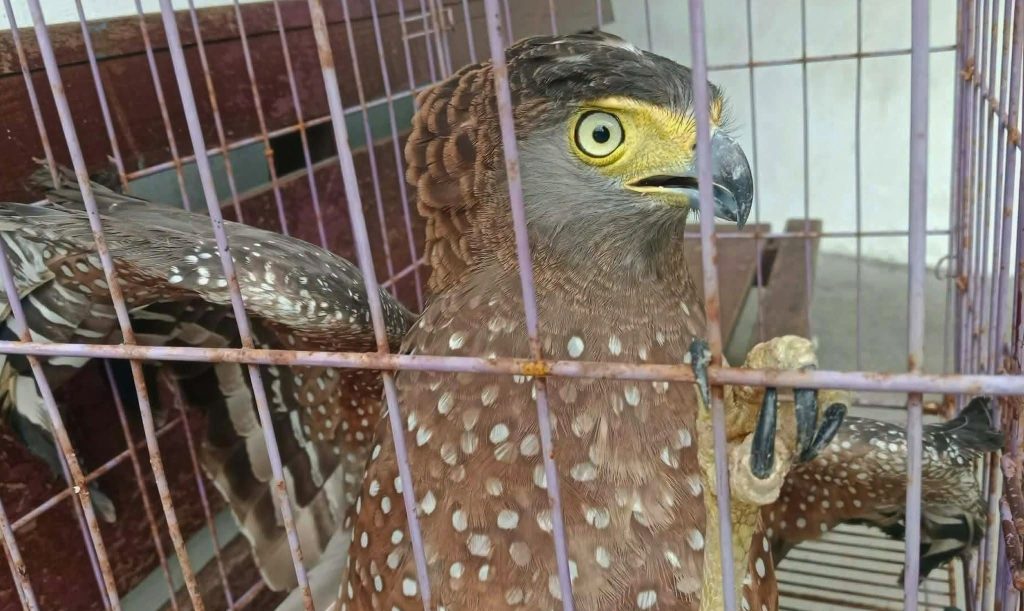
SUBIC, Zambales — The Barangay Local Government Unit (BLGU) of Matain in Subic, Zambales, has turned over a rescued Philippine serpent eagle (Spilornis holospilus) to the Department of Environment and Natural Resources (DENR) for assessment and rehabilitation.
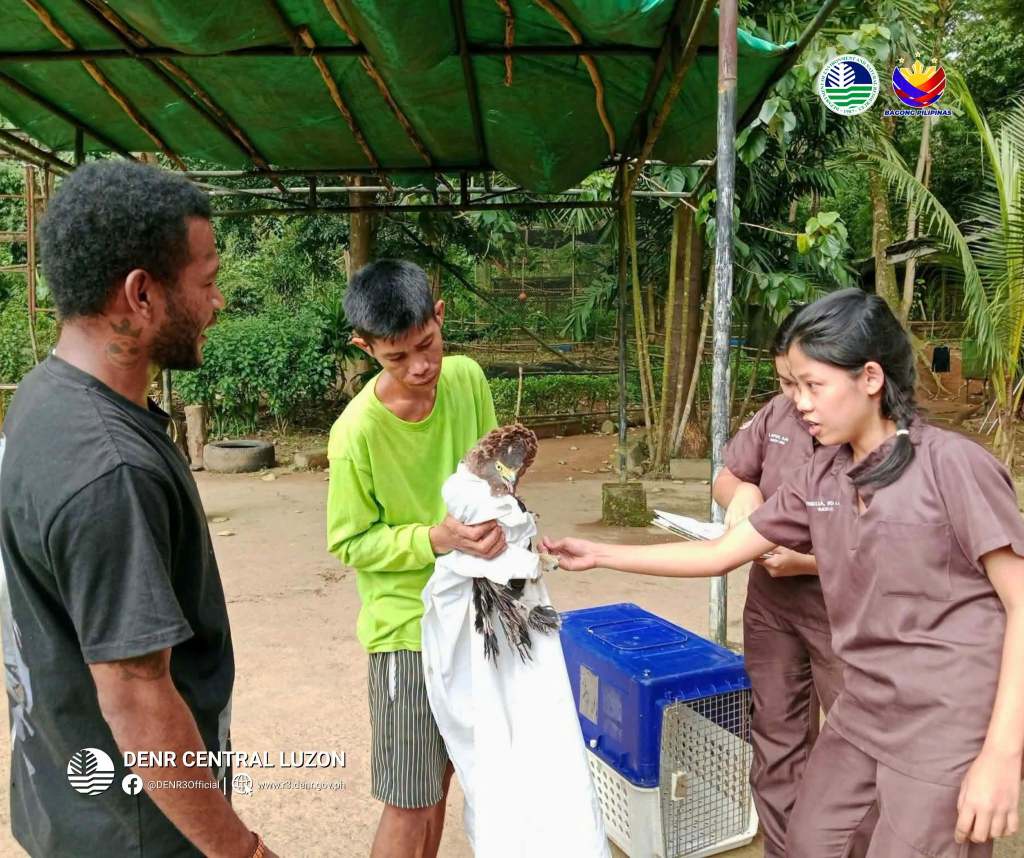
The eagle was formally received by Forester Edward Sernadilla, head of the DENR Community Environment and Natural Resources Office (CENRO) in Olongapo City, and wildlife enforcement officer Bryan Vallejos, who conducted a preliminary health assessment and ensured the bird was safely handled.
Sernadilla said the eagle would be transferred to the Wildlife In Nature Rescue Center in the Subic Bay Freeport Zone for further medical evaluation and rehabilitation.
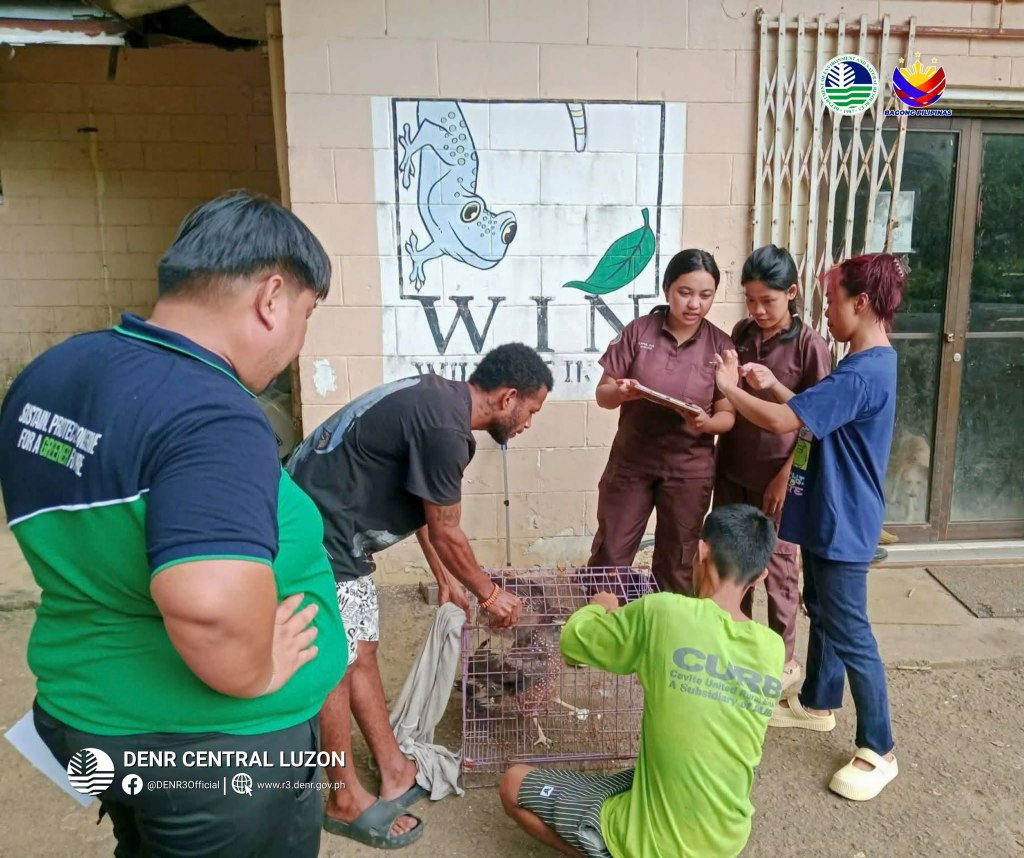
The facility will assess the bird for possible release back into the wild, he said.
DENR Regional Executive Director Ralph Pablo commended the Matain barangay government for promptly turning over the rescued wildlife to authorities.
“The action of Barangay Matain shows how communities can help protect our wildlife,” Pablo said. “Promptly turning over rescued animals to the proper authorities gives them a better chance to receive the care they need and, when possible, return to their natural habitat.”
The Philippine serpent eagle is endemic to the Philippines and is commonly found in forest edges, foothills, riparian areas and cultivated landscapes. Under DENR Administrative Order No. 2019-09, it is classified as an Other Wildlife Species (OWS).
The species is listed as Least Concern by the International Union for Conservation of Nature (IUCN), although the DENR has noted a declining population trend.
The Philippine serpent eagle is also protected under Republic Act No. 9147, or the Wildlife Resources Conservation and Protection Act of 2001, which prohibits unauthorized collection, possession, transport and trade of wildlife.
The DENR urged the public to report rescued, injured or displaced wildlife to the nearest DENR office rather than keep or attempt to rehabilitate the animals on their own.
“Prompt coordination allows wildlife authorities and accredited facilities to provide appropriate assessment, treatment and rehabilitation, and determine whether an animal can eventually be returned to its natural habitat,” Pablo said.




Leave a comment