
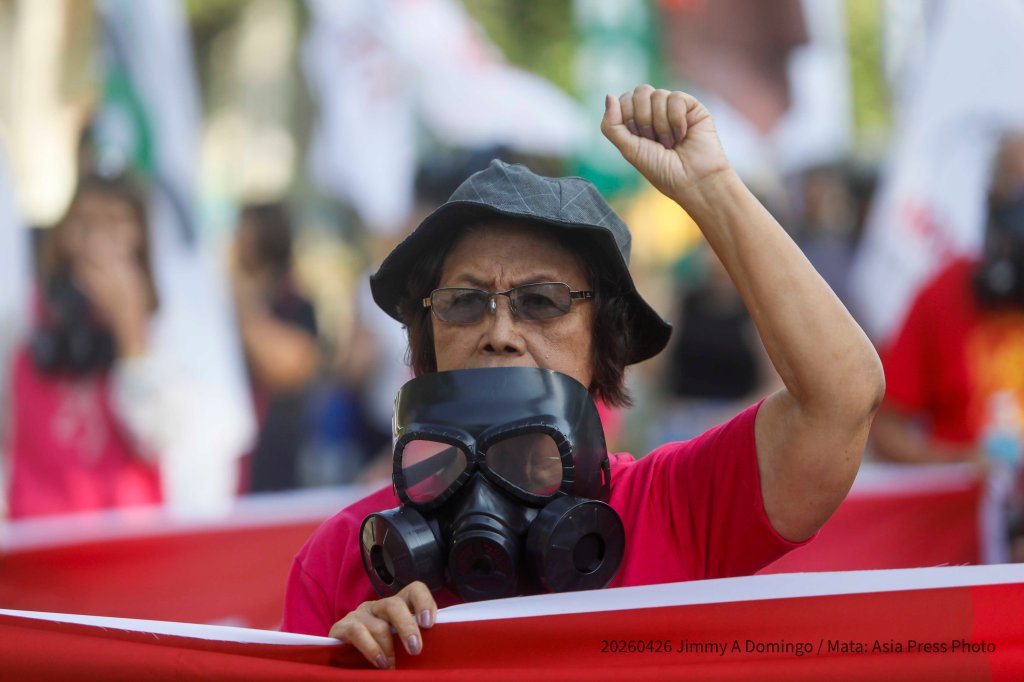
Filipino climate and social justice groups stage a rally in Elliptical Road, Quezon City on April 26, 2026 as part of global demonstrations calling for a rapid, just, and equitable transition to a fossil-free future. The protest is time for the 1st International Conference on Transitioning Away from Fossil Fuels in Santa Marta, Colombia, a historic summit co-hosted by the governments of Colombia and the Netherlands that aims to facilitate the global energy transition.
Protests were also held in India, Pakistan, Bangladesh and Nepal and in locations in Africa, Latin America, North America, and Europe.
The mobilizations in Asia were led by members of the Asian Peoples’ Movement on Debt and Development (APMDD) amid a global energy crisis that has left Asia particularly exposed.
Lidy Nacpil, coordinator of APMDD, said “In 2025, 90% of Liquified Natural Gas and 80% of oil transiting through the Strait of Hormuz were bound for Asian markets.”
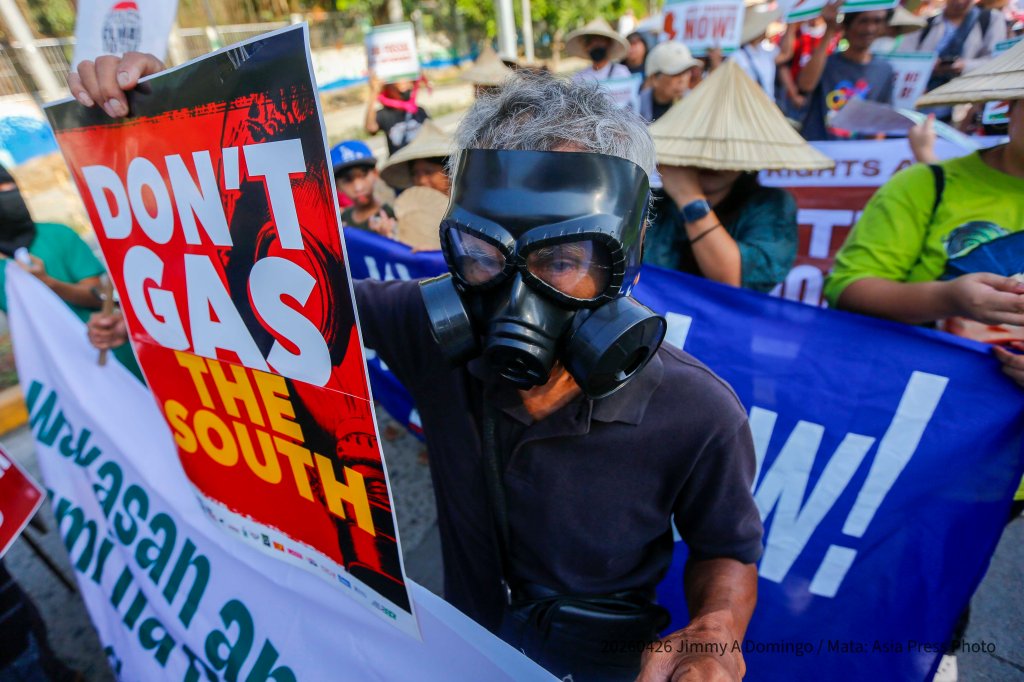
“The current energy crisis has shown that we have no choice but to dismantle the fossil fuel dependence that has chained Asia’s economies to the extraction of coal, oil, and gas,” Nacpil said.
Nacpil explained “there can be no path towards global peace, stability, and climate justice as long as our energy supply is tied to the volatility of fossil fuels.”
“The Santa Marta Conference is an opportunity to strengthen international cooperation towards the end of import-dependent, vulnerable energy sources and transition to community-owned, renewable energy systems,” she said.
APMDD said in a press release that in the Philippines, the first country to declare a state of national energy emergency a month ago, the climate activists marched to the Lapu-Lapu Monument in Quezon City against the backdrop of surging fuel prices that have forced Filipino farmers to abandon harvests and threaten to push 3.1 million Filipinos into poverty.
Protest leader Flora Santos, president of the Oriang Women’s Movement, said “when fuel prices surge, it’s ordinary Filipinos who suffer– basic commodities are more expensive, the value of workers’ wages decreases, families’ household budgets are stretched, and women’s burdens are heavier.”
She added “a rapid, just, and equitable transition out of fossil fuels is not only a matter of climate policy, but also the key to our people’s welfare and survival.”
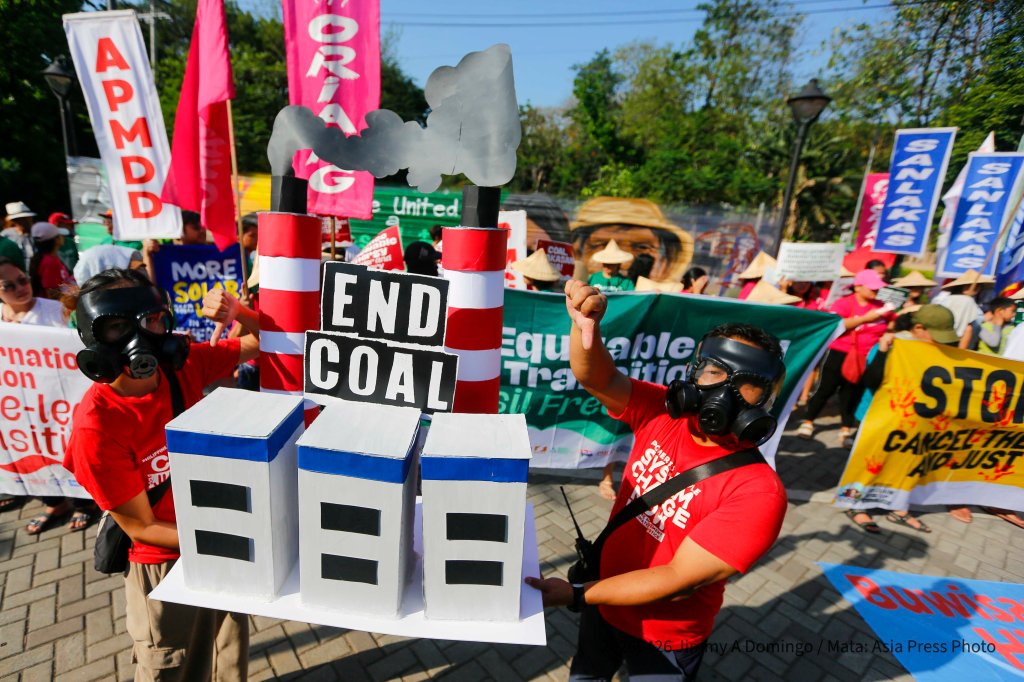
Philippine Movement for Climate Justice national coordinator Ian Rivera said “international cooperation is key to a global transition, and there can be no just and equitable phaseout of fossil fuels without rich countries contributing their fair share, including delivering trillions in public, grant-based, and unconditional climate finance.”
“To complement and support outcomes at the UNFCCC, Santa Marta must champion the operationalization of the Just Transition Mechanism. The mechanism must drive actual implementation and ensure that those of us in developing countries shape the transition by having access to direct, non-debt-creating, and differentiated funding for climate action,” Rivera added.
Happening alongside the Santa Marta Conference in Colombia is a counterpart summit, the Peoples’ Summit for a Fossil-Free Future, organized by a coalition of 900+ organizations and networks to serve as a independent movement space for civil society to unify demands and build collective power. Tomorrow, state delegates and civil society representatives will meet at the Assembly of the People, a formal dialogue convened by the Colombian government, to ensure that the demands of civil society shape official outcomes.
Nacpil, who is in Santa Marta for the conference, said: “Santa Marta is not a substitute for the UNFCCC process, but aims to complement it. Civil society is here because we cannot afford to squander this critical moment. We must chart the path forward and ensure the demands of those most affected by the climate crisis are heard by governments at the Assembly of the People.” (Text and images courtesy of Jimmy A. Domingo)
About the Author: Jimmy A. Domingo is a visual journalist, educator, and mentor whose work bridges documentary storytelling, visual communication, and journalism education. With years of experience in photojournalism and visual reporting, he has contributed to the development of emerging storytellers through his work in both academic and professional settings. Domingo currently teaches at De La Salle University and the University of the Philippines Diliman, where he mentors students in visual journalism, media practice, and documentary storytelling. His work and advocacy focus on using photography and visual narratives to capture social realities, cultural identities, and human experiences.



Leave a Reply