
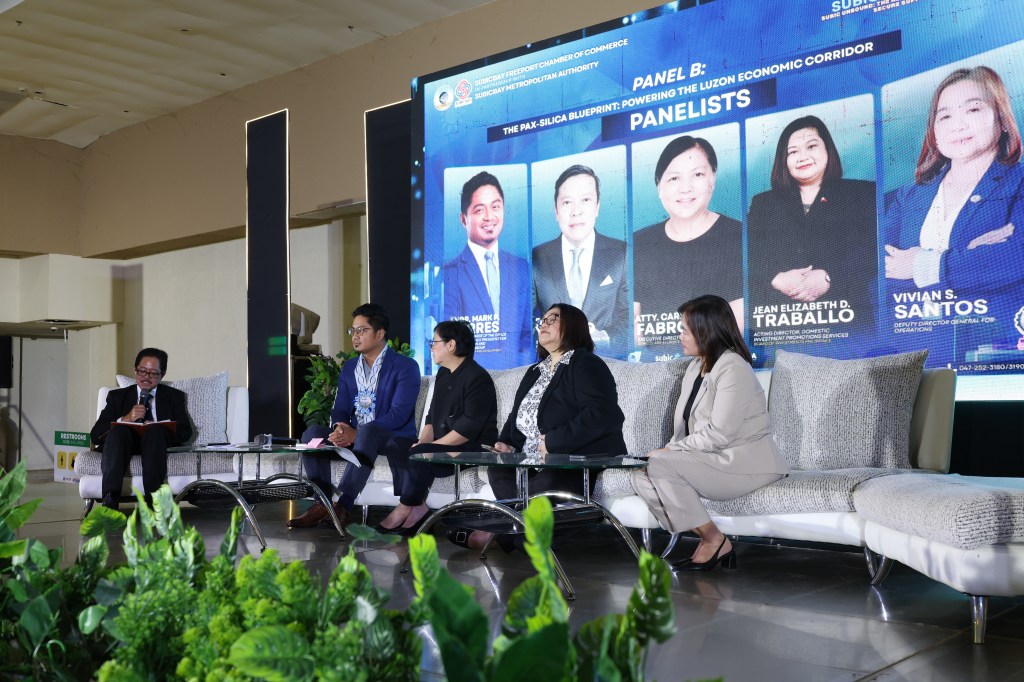
SUBIC BAY FREEPORT — The Subic Bay Freeport is seeking a larger role in logistics and supply-chain operations supporting the PAX Silica initiative and the Luzon Economic Corridor, with government agencies working to attract investments in advanced manufacturing and technology.
At the Subic Bay Exhibition (SUBEX) 2026 on October 19, Subic Bay Metropolitan Authority (SBMA) Senior Deputy Administrator for Port Operations Ronnie Yambao said Subic’s port infrastructure and multimodal logistics capabilities could support the movement of equipment, project cargoes and supplies for industries across the corridor.
Yambao cited the Freeport’s 15 piers, container terminal and logistics facilities as potential assets for industrial projects involving semiconductors, energy and advanced manufacturing.
The SBMA and the Bases Conversion and Development Authority (BCDA) signed a memorandum of understanding on June 25 to explore logistics requirements and business partnerships related to PAX Silica. The agreement was signed by SBMA Chairman and Administrator Eduardo Jose L. Aliño and BCDA President and Chief Executive Officer Joshua Bingcang.
The framework also provides opportunities for Subic-based businesses to offer warehousing, cargo handling and other services to companies operating in Clark and other areas covered by the corridor.
Yambao cited Subic’s handling of battery shipments for the 3,500-megawatt Terra Solar project as an example of its capacity to manage specialized cargo. He also pointed to the Freeport’s fuel storage facilities and fertilizer-handling operations as contributions to the country’s energy and food security.
Engineer Mark P. Torres, officer-in-charge of the BCDA Office of the Vice President for Conversion and Development, said infrastructure, connectivity and reliable utilities are essential to attracting industrial investments.
Torres said the BCDA is pursuing infrastructure and connectivity projects to support industrial clustering and manufacturing. The agency is also exploring ways to diversify energy sources through waste-to-energy, solar power with battery storage and natural gas generation, while advancing water supply solutions for industrial locators and nearby communities.
Philippine Economic Zone Authority (PEZA) Deputy Director General for Operations Vivian Santos said economic zones play a key role in supporting export-oriented industries. PEZA oversees 441 economic zones hosting more than 4,400 locator enterprises in sectors such as semiconductors, automotive, information technology, agribusiness and pharmaceuticals.
Santos said the agency is also automating transactions to streamline import-export procedures and improve business efficiency.
Meanwhile, Board of Investments Acting Director for Investment Promotions Services Jean Elizabeth D. Traballo said the agency helps investors identify suitable locations, access incentives under the Strategic Investment Priority Plan and connect with workforce development programs.
Traballo emphasized the need for coordinated investment promotion to ensure local enterprises and Filipino workers benefit from investments generated by the corridor.
The discussions at SUBEX 2026 focused on integrating ports, industrial estates, utilities and investment services to strengthen Central Luzon’s position as a manufacturing and logistics hub.
For Subic, participation in the initiative could create additional opportunities for port operations and local suppliers as investments in advanced manufacturing and other industries expand across the corridor.
TOP 📸 || Officials from the BCDA, SBMA, BOI, PEZA and SCAD participate in the discussion titled “The PAX Silica Blueprint: Powering the Luzon Economic Corridor” at SUBEX 2026 on October 19.



Leave a Reply