
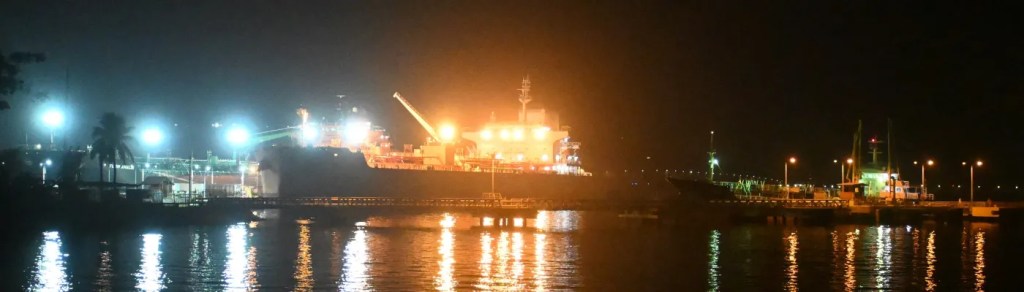
SUBIC BAY FREEPORT — The Subic Bay Freeport, which has the largest fuel storage facility in the country, is expected to play a major role in the strategic procurement and security of local fuel supply amid the continuing conflict in the Middle East, an official of the Subic Bay Metropolitan Authority (SBMA) said.
SBMA Senior Deputy Administrator for Operations Ronnie Yambao said the Philippine National Oil Company’ Exploration Corporation (PNOC-EC) is now bringing in oil imports through the Port of Subic and makes use of the Subic fuel depot for storage.Among the latest PNOC-EC deliveries was the 329,000-barrels diesel fuel shipment delivered here on April 4 by the fuel tanker MT Maritime Guardian.
Energy Secretary Sharon Garin said the shipment, sourced from Malaysia and procured from Singapore-based trader Vitol Asia PTE Ltd., was delivered to the Philippine Coastal Storage & Pipeline Corp. (PCSPC), which operates the fuel depot here.
“We are expecting more fuel shipments to arrive in Subic,” Yambao told BusinessMirror late Saturday.
He said SBMA Chairman and Administrator Eduardo Jose L. Aliño recently discussed with Bureau of Customs Subic District Collector Arnaldo M. Saulong certain support measures to facilitate the entry of strategic fuel products to boost the national fuel inventory.
“Chairman Aliño has ordered the Port Operations Group to provide seamless processing of PNOC-EC shipments to minimize delays at this crucial time when we need more energy to sustain the economy,” Yambao said. “And we have promised to deliver,” he added.
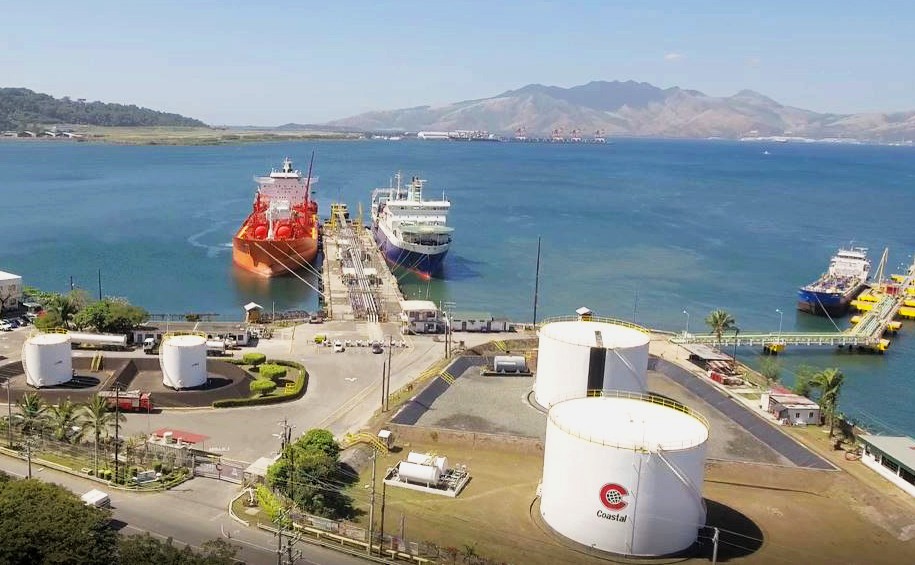
Part of the Philippine Coastal Storage & Pipeline Corp. fuel depot at Boton area in Subic Bay (PCSPC)
President Marcos has ordered the release last month of P20 billion in emergency funds from the Malampaya Gas Fund to secure the country’s fuel supply and shield Filipinos from the impact of the global oil crisis.
The PNOC-EC was tasked to implement the P20-billion intervention program designed to secure strategic fuel products, stabilize pump prices, and ensure uninterrupted operations across critical sectors.
The Department of Energy (DOE) also said it is exploring new sources, including potential imports from Southeast Asia and Russia, to strengthen the country’s emergency buffer stock.
Yambao said with the unresolved conflict in Middle East, will emphasize the importance of Subic’s fuel depot, as well as the need to build similar facilities in key area of the country.
Pres. Marcos’s Executive Order No. 110, which declared a state of national energy emergency, also required the monitoring of available capacity of private fuel terminals and enable their use by the PNOC.
Subic’s PCSPC fuel depot, which is owned by the Miami-based investment firm I Squared Capital, operates a 6.3-million-barrel storage terminal, with storage tank sizes ranging from 2,000 barrels to 200,000 barrels, and capable of storing gasoil (diesel), jet-A1 fuel, mogas (standard automotive petrol), ethanol, and other biofuels.
PCSPC also operate a marine terminal with two fully-equipped jetties for both loading and discharging operations; and a tank truck loading system consisting of eight loading gantries across three tank farms.
Subic’s PCSPC fuel depot accounts for over 20 percent of the country’s total import storage capacity and is the largest independent fuel storage facility in the Philippines. ▲TAKTIKOM NEWS AND FEATURES
TOP📸: Two oil tankers are docked at the Philippine Coastal Storage & Pipeline Corporation’ marine terminal in Subic Bay on April 17 (TAKTIKOM NEWS AND FEATURES)





Leave a Reply