
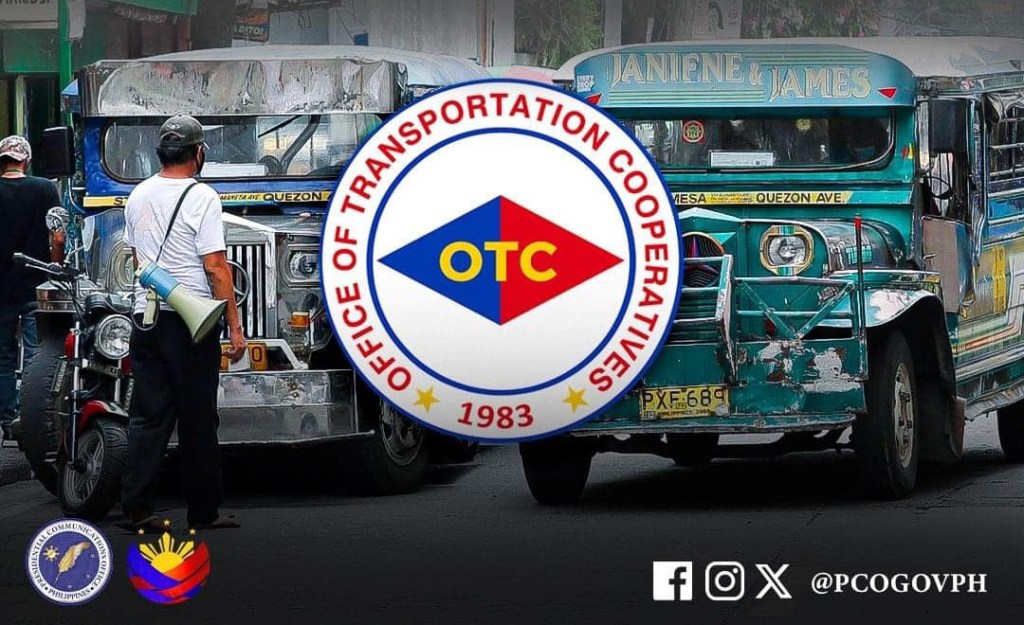
Majority of the public utility vehicles (PUVs) have supported the decision of President Ferdinand R. Marcos Jr. not to extend consolidation, according to Office of Transport Cooperatives (OTC) Chairman Jesus Ortega.
In an interview, Ortega said that President Marcos initially listened to the request of the cooperatives to extend the consolidation in March 2023, but emphasized that the President made a firm decision not to extend the deadline in December last year.
“Nung nag-extend po ‘yung ating Pangulo nung Marso, si President Marcos. Ginawa po niya ‘yun para pagbigyan muli ang mga nagtatanong—being new, one year pa lang siya nun. That was a good move on the part of the President to say ‘I am listening to you’,” Ortega said.
“Pero nung nag-decide naman siya nung December 12 na firm na, nag-decide rin s’ya, nakinig rin s’ya sa majority,” he added, referring to the majority of the cooperatives who supported President Marcos’ decision not to extend the consolidation.
In another development, Ortega also clarified that the reported PhP50.00 fare in modern jeepneys has no basis as he emphasized that the government cannot immediately implement fare matrix movement without proper consultations.
“Ngayon po sinasabi nila magiging singkwenta after five years, with due respect sa kanila, there is no basis for that at masakit po na magsabi ng mga bagay na nakakatakot na walang katotohanan,” Ortega when asked about the supposed PhP50.00 fare increase on modern jeepneys.
He emphasized that the government has retained the two-peso fare matrix difference between traditional and modern jeepneys, which means that the current fare for modern jeepney is still at PhP15.00, which is two pesos higher than traditional jeepneys at PhP13.00.
Ortega added that fuel price hike dictates fare increase and not due to modernization of jeepneys.
He also reiterated that the Land Transportation Franchising and Regulatory Board (LTFRB) will hold hearings and meetings and will coordinate with the National Economic and Development Authority (NEDA) before coming up with any decision on fare increases.
He also clarified that the cooperatives of modern vehicles are contented with the two-peso fare difference given to them years ago.
Meanwhile, the Land Transportation Franchising and Regulatory Board (LTFRB) reported that 145,721 units or 76 percent of public utility vehicles and UV express have consolidated.
“As of this time, we already have 76 percent or 145,721 in terms of the units for UV express and PUJ. For UV Express, nasa 82 percent na po yung consolidation rate, and for the PUJ, that’s 73.96 percent,” LTFRB Board Member Riza Paches said in an interview.
Paches explained they have conducted the tracking of PUV and UV express units that followed the consolidation of their units from December 26 to December 31 last year “to note” those who beat the deadline.
The LTFRB official attributed the increase in consolidation rate to the campaign they conducted last month.
“Overall, we projected around 18,026 but after December 31, yung level po nung nag-consolidate at nag-apply for consolidation was actually 25, 629 units. This makes up 142 percent from what we projected,” Paches said.
“So, meaning to say that the campaign for consolidation during the last stretch of December was actually effective and the matter by which the agencies have been opening their offices, relaxing certain policies, and requirements, and even reaching out to all these transport service operators was to the agencies perspective,” she added.
President Ferdinand R. Marcos Jr. said last month that the government cannot allow further delays in the consolidation of PUVs as he emphasized that “adhering to the current timeline” will ensure “everyone can reap the benefits of the full operationalization of our modernized public transport system.”
 Ang Pahayagan
Leave a comment