
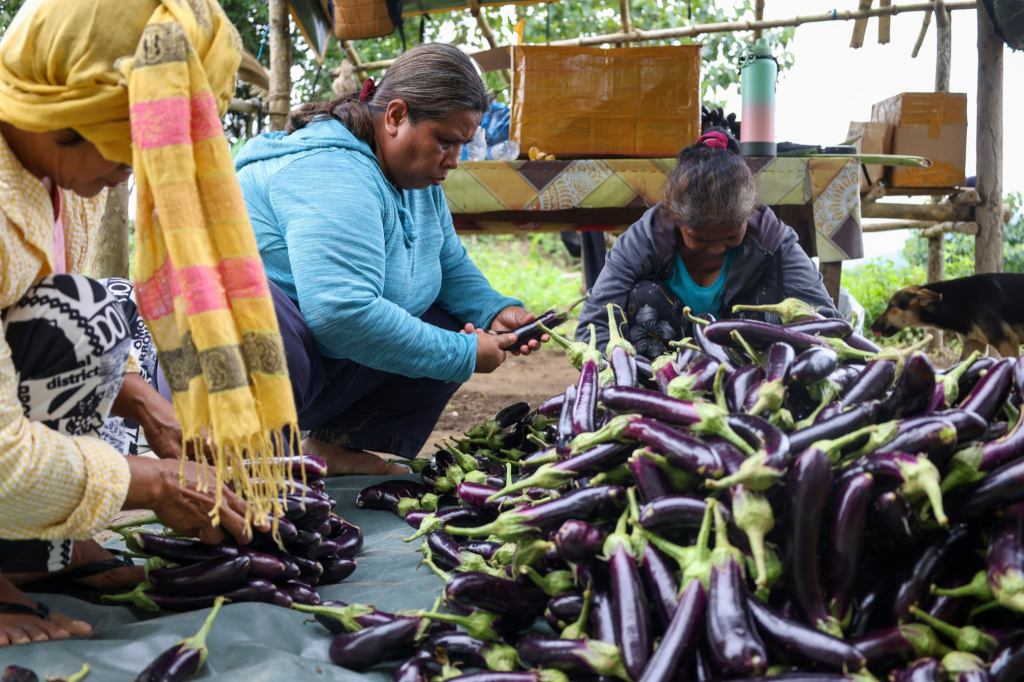
NEW CLARK CITY— The Bases Conversion and Development Authority (BCDA) is enhancing the agricultural skills of indigenous farmers in Tarlac through the Ayta Ethno-Botanical Center (AEBC) in New Clark City.
Currently in its 14th week, the AEBC program aims to upskill 300 Aeta farmers from Capas and Bamban, Tarlac through hands-on, farm-based training.
This initiative is implemented in partnership with the Pampanga State Agricultural University and the Department of Agriculture in Central Luzon.
Led by BCDA President, and CEO Joshua Bingcang, the AEBC serves as a community-based sustainability model that combines indigenous knowledge with modern agricultural practices.
Through the center, Aeta farmers undergo training in sustainable crop production, climate-resilient farming, post-harvest handling, and agripreneurship, enabling them to take an active role in both production and the market.
Situated on a 10-hectare learning site in Sitio Binyayan, Capas, the AEBC operates as a living classroom and livelihood hub where Aeta farmers train in rice and high-value crop production such as coffee, mango, and various vegetables.
By gaining these new competencies, they are better equipped to diversify their income, improve food security, and restore their traditional respect for the land.
In addition to cultivation skills, the AEBC program prepares trainees for educational equivalency certifications in agriculture and agribusiness.
These certifications provide formal recognition that boosts their employability and access to government support.
“This role is truly meaningful because it contributes to our bigger goal of ensuring food security. It’s about empowering stakeholders and engaging the community, especially our indigenous partners in New Clark City. We want them to be part of this progress—to harness their skills and strengths in agriculture and turn it into something we can proudly showcase in New Clark City,” Bingcang stated.
In recent sessions, Aeta farmers harvested over 43 kilograms of eggplants and 6.5 kilograms of green chili from their demonstration plots.
They also completed a module on Climate Resilience in Agriculture, where they learned adaptive strategies to thrive amid changing weather conditions.
For the Aeta community, the AEBC is already making a transformative impact.
“Malaking tulong po sa amin ito. Ang project na ito ay binigay ng BCDA kaya ipinagmamalaki namin ito, kaya kami ay nagsisikap. Marami po kaming natutunan at gusto po naming mas marami pang ganitong proyekto (This is a big help to our community. This project was initiated by BCDA, that is why we take pride in it, and we work hard. We are learning a lot, and we hope to have more projects similar to this),” Sitio Binyayan Chieftain Berling Capiz shared.
BCDA Executive Vice President Gisela Kalalo emphasized that the agency’s mission is to uplift the Aeta community through sustainable agribusiness and innovative farming techniques, while also prioritizing the preservation of their cultural identity.
“Hindi lang po kami nakatuon sa aming pakikipag-usap sa mga foreign investors, sa mga local investors, mahalaga rin po para sa amin na bigyang-pansin ang aming mga kapwa Pilipino, tulad ninyo, dahil masaya kami na mapapanatili namin ang inyong kultura (We are not only focused on engaging with foreign investors, but also with local investors. It is equally important for us to give attention to our fellow Filipinos, like you, because we are happy to be able to help preserve your culture),” she added.
The AEBC program aligns with BCDA’s commitment to the United Nations Sustainable Development Goals (SDGs), specifically SDG 1 (No Poverty), SDG 2 (Zero Hunger), SDG 8 (Decent Work and Economic Growth), and SDG 12 (Responsible Consumption and Production).
Through this initiative, BCDA ensures that as New Clark City grows, its development advances in an inclusive, resilient, and people-centered direction by building the capacities of indigenous communities and promoting sustainable food systems. (PIA 3)
 Ang Pahayagan
Leave a comment