
MANILA – Pending President Ferdinand R. Marcos Jr.’s approval of the first service contracts for native hydrogen exploration, the Department of Energy (DOE) has surveyed parts of Zambales and Pangasinan, areas included in the 2024 Philippine Energy Bid Round.
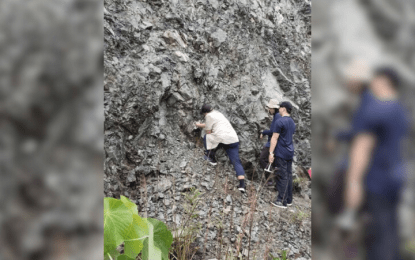
The Botolan Hot Spring and Nagsasa Seeps in Zambales and the Mangatarem Hot Spring in Pangasinan were surveyed by a team from the DOE, along with those from the Department of Environment and Natural Resources (DENR) and the local governments of Zambales and Pangasinan two weeks ago.
Assistant Director Demujin Antiporda of DOE’s Energy Resource Development Bureau (ERDB) said in a briefing Wednesday that nine areas in the country have been identified for native hydrogen exploration, a world first since the Philippines is the first to have the framework for such activity.
These are the Casiguran Ophiolite belt in Aurora province; Zambales Ophiolite Belt; Angat Ophiolite Belt in Bulacan; Eastern Bicol-Eastern Mindanao Ophiolite Belt; Antique Ophiolite Belt; Western Bicol-Eastern Leyte Ophiolite Belt; Palawan Ophiolite Belt; Zamboanga-Sulu Ophiolite Belt; and Central Mindanao Ophiolite Belt.
“This survey marks a critical first step in supporting the service contractors by providing baseline geological and environmental data to guide their exploration activities. By identifying surface indicators such as hot springs and ophiolitic rock formations associated with natural hydrogen generation, the DOE aims to reduce exploration risks, streamline technical studies, and ensure alignment with safety and environmental standards,” Antiporda said.
Antiporda said the surveys “lay the groundwork for where to focus efforts and what approaches to take in the pursuit of developing clean and sustainable energy sources” and back Philippine Nuclear Research Institute’s (PNRI) ongoing study that identified Nagsasa seep in San Antonio, Zambales as having the highest annual emission annually at 800 tons.
In a separate interview, Antiporda said the pending approvals have US and Singapore-based players that have applied for service contracts, with the sub-phase 1 project amounting to around USD5.7 million.
He said officials do not have any idea of the volume of resources that can be explored from the identified sites, but noted that the players are proposed to be given seven years to explore before they can drill it if they see large output potential.
Aside from the two surveyed areas, Antiporda said there is an ongoing process for two additional sites in Zambales and in Leyte. (PNA)
NATIVE HYDROGEN. Personnel of the Department of Energy during the survey for a possible native hydrogen source in Zambales in this undated photo. The Department of Energy on Wednesday (July 9, 2025) said surveys were conducted in the provinces of Zambales and Pangasinan two weeks ago to check for opportunities for native hydrogen exploration. (Photo courtesy of DOE)
 Ang Pahayagan
Leave a comment